Wednesday, July 25, 2012

SINISTRA


When I and my symmetric brother
were born it could not be said
who would dominate
or be preferred though custom
meant that he would be
the one to shake
and with time we learned
that he would write
open doors
hold the bow
play the major note.

I had an alien role:
clumsy, I had no right
to take the lead
or cut the steak,
or make the model boats
or brush the teeth.
The best that I could do
was squeeze the paste
hold the fork
lift the case
perhaps share
a wash with him together
and then with face.

I had my place
at the piano, true,
to add the bass
to his excursive treble
to help with typing
but not with pleasuring
either the body of my owner
or that of another –
well, sometimes perhaps
but with a lot of trouble …

But when the right was damaged
my lack of education
was reformed. 
Suddenly I was taught
to shave,
to guide the penis as it peed,
cut as well as hold the steak
scribble crumpled messages
with pens,
compute.

Once over, I took back
my old dysgraphic role
a slave to all that’s right.
No voice,
today I have no choice
but to live on handouts
and the occasional leftover.


AIR


The God of Israel neither slumbers nor sleeps,
he learned as part of his youthful catechism
but now at eighty, breathlessly awaiting cataclysm,
he wonders if He also weeps

as he does, in the early hours awake,
scorned by the darkness, choked by panic,
impotent in a dream of drowning, frantic,
gasping, ‘What step, O God, to take’?

He was an engineer and knew what ticked,
worked on tall buildings, watched his wife
as her motor neurones lost their life
thirty years ago, saw her slacken, food stick.

The irony was not lost on him that both
she, no muscles, and he, no lungs or air,
were united in a book of common prayer.
A unifying recitation, welcome death.

Clouds of incense smoke at his funeral mass
embrace the word and prayers.
“He was never one to give himself airs,”
the priest says, and Freud lets the moment pass.


Wednesday, July 11, 2012

MAKING MUSIC


The cobbles of Arezzo,
their order and community,
were sermons for the pious
monk named Guido Monaco
as he walked along the road.
While wondering what God
may be saying to him
Guido’s mind strayed to ways
whereby he might follow
the example of the stones, their fit,
permanence and community,
to create order and stability
for the music in his church.

Music had no written record,
was passed from generation
to generation in Christendom
for a thousand years
by laborious recitation,
endless repetition.
It travelled from one place to another
by father’s voice to son
who journeyed with it,
its glories shackled by
the boredom of rote learning
its accuracy blunted
while the liturgy and the chanted words
were written, unchanging yet open to exegesis
but not to the distorting caprice
of imperfect memory.

From the sermon in stones Guido took away
a vision in which the music of the chants
was secured like the cobbles
in the ordered pavement
as were the words written
in the chants, a dream of system,
permanence and metalanguage
where notes and cadences
high and low and in between
were written down as were the prayers.

His contemplations
led Guido to write basic notes
above the lines of chants
He assigned letters
to the syllables of music,
each for a different pitch,
tracing their passage
on four horizontal lines.
The sequence of neumes
hung like small black birds along the lines.
Guido then used his antipher
of lines and neumes
in his church in Arezzo
praising God for its wonder and order.

At the pope’s request,
Guido took his music to Rome in 1020,
winning John XIX’s endorsement.
Although Guido’s music was not popular
Rudolf of Moustier-sur-Sambre
brought it to choristers in Belgium:
though they did not know Italian
they learned to sing
as from Arezzo
using Guido’s system
of annotation.

Asked why he wept so often
Rudolf replied it was from joy
as, he said, he had found a ladder into heaven.
               

Wednesday, June 27, 2012

PARALLEL PARITY


       Sydney                                                           


Three weeks and my milk is in
and Lucas is feeding well
and I am learning
the soft tug of his suck
his smell and his opened eye,
his jerky movements
his tiny penis and his skin of silk.

My vagina is healing
and my strength returning.
If Megan were to hold him
close for hours
I think that her breasts too
would soon
yield milk.

When we decided to marry
we had not discussed a child
but after two years we decided
and our dear friend
Hugh provided sperm:
I wonder what relationship
might develop between him
and his sort-of son?
                                  
Somalia


Three weeks and tomorrow
Ashkir will die. 
I have no milk.
The soldiers at the camp
have no interest in babies
and the famine continues
for us but not for them.


Ashkir was conceived
on a drunken raid one night:
soldiers – ‘guarding our camp’!
One whose name I never heard
swaggered, rattling with strings of 
ammunition, laughed and jumped me:
there was no help.


I shall follow Ashkir soon.
I still lose blood
and grow weaker.
I’ve seen
many mothers die.
I wait.
Next week I would
have turned fourteen.


Monday, June 11, 2012

MORNING


It comes softly
moving aside clouds
as gently as a lover
opens his sleeping partner’s eyes
with a finger and a smile;
eyes that were closed like doors 
of a theatre where dark dramas
played out on the stage
of deepest imagination,
complicated thoughts, dreams of fright,
of agendas of anxious meetings
that fail, of lost parents, children,
passports, of flying in planes
between tall buildings
not far above the ground.  


What we see we see with eyes
like fingers that can play
the keys of only one octave
of six pianos side by side
that make up the electromagnetic band.
To right and left are infra ultra red
and violet waves, of radio and x,
that wash up foreign scripts
in flasks made from rare metals –
peridium, lucidanium – and alloys
unknown in our solar system,
forged ten trillion years ago
at the time of star formation
and galactic collision.


Perhaps our brains that sweat
and toil at night  
sense directly messages
from these sources
or instead, like the strange fish
that live in freezing or boiling
waters a mile deep – bioluminescent –
their large eyes comprised
of several retinal layers,
see only by their own pale light?


The light comes softly,
moving aside the night
with its alien invasions of the mind
nightmares and alarms,
resolutions, fabrications,
decisions that don’t last
and palpitations.


Friday, April 6, 2012

LIBERTY


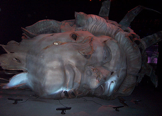
This was once New York –
this desert so extensive,
so grey it could be
the moon –
I was told this
by the only man
I’ve seen
for days.

I don’t know
how many of us remain.

Desert –
and this massive
head, broken from its neck,
bearing a bent diadem,
an aureole
of the seven seas,
the seven continents and seven rays
of the unrelenting sun.

Tuesday, April 3, 2012

EPIPHANY


Rex and John, both Australian neurosurgeons, were attending a conference in Oxford.


That high summer day on the deck
of the Head of the River,
relaxed by his Ploughman’s Lunch and ale,
Rex looked into the cloudless sky,
saw several far-off small black dots:
maybe Canada geese, if not,
maybe, he smiled, a replay
of the Battle of Britain
Hard to be certain …
But the dots stood still.

Rex set down his glass,
stunned by rapid-fire thoughts
of probabilities.
“I think,” he said quietly to John
“I have secondaries in my brain.”
Ten years ago Rex had
a melanoma on his back.
There were questions then.
“One never knows,”
his surgeon said.

“Are you sure they’re not floaters?”
Rex closed each eye in turn.
“Positive.” he said.
“Migraine aura?” 
“Never before.”


Rex knew the drill.
For a decade he had savoured each day,
freed it from bureaucracy and strife.
Fancy him, a wise man from the east,
receiving this epiphany in Oxford –
Oxford, home of Tolkien
and other master weavers of fantasy –
this clear, prosaic sentence!
How ironic that its execution
would be inside his head!

“I think that we should finish lunch,”
Rex said slowly.
John touched his arm.

Both turned again to their cheese, meat
and bread, emptied their glasses
and left with the calm they assumed
as they emerged from theatre,
weary with effort, seeking
relatives in the waiting room
desperate for news of a miracle,
to confess that it was not within their powers
to remove all their loved one’s tumour
though they’d tried for hours.